Thursday, November 25, 2021

It's Been 400 Years!


Today, Thursday, November 25, 2021, is Thanksgiving Day here in the United States.

And it was exactly 400 years ago (well, they probably celebrated it sometime in October, rather than in November) that the surviving (just half; about 52) members of those who sailed to New England the previous year on the Mayflower held a celebratory feast, in company with some of their Native American friends and allies, to give thanks for the recent harvest.

Now, this is not the first such thanksgiving held in then-British North America. That milestone belongs to the colony in Jamestown, Virginia, whose colonists enjoyed a Thanksgiving service after English supply ships arrived with food in the spring of 1610.

But the thanksgiving held in Plymouth Colony in the fall of 1621 has taken hold in the popular imagination as the foundation on which the modern Thanksgiving Day holiday is based.

Why do I care? Well, three of my ancestors were at that thanksgiving celebration in 1621: my 10th great grandmother Mary Chilton (who as a teenager had lost both her parents in the first hard winter); another 10th great grandmother, Constance Hopkins; and her father, my 11th great grandfather, Stephen Hopkins. (His first wife, Mary, had died in England in 1613.) So I feel a personal connection to the events of 1620 and 1621 in what is now Plymouth, Massachusetts.

"But what does this have to do with heraldry?", you may ask.

I used to make the joke that it was a shame that none of my ancestors ever took an interest in one their descendant's (me) interest, and used a coat of arms. I had to stop saying that after a visit several years ago to King's Chapel Burying Ground in Boston, Massachusetts, to visit the grave of my 10th great grandmother, Mary Chilton, and her husband, John Winslow (the younger brother of Mayflower passenger Edward Winslow).


On one side of their table tomb (above) I found this heraldic plaque, displaying the Winslow arms:


It is fairly commonly believed that several Mayflower passengers used, or at least had the right to use, coats of arms. These are, as found in Crozier's General Armory: Edward Winslow (my 10th great grandfather's older brother); Myles Standish; John Alden; William Bradford; William Brewster; and Richard Warren.

In fact, though, there is contemporary evidence for the use of heraldry by only one of those men: Edward Winslow, Assistant Governor, three times Governor, and also Plymouth Colony's agent in London. He is known to have used a seal with these arms on it.

We are also confident that his son, Josiah Winslow, the 14th Governor of Plymouth Colony, used these arms.

That being the case, there is presumably no reason why my direct ancestor John Winslow would not have had the right to bear these arms as well, whether or not he actually used them. (Certainly, the plaque on the Winslow tomb in King's Chapel Burying Ground, and a similar plaque on the Josiah Winslow tomb in Marshfield, Massachusetts, below, are likely of a later date, and not contemporary with the individuals commemorated there. They are thus secondary or even tertiary evidence for the use of these arms by those men.)


And there you have it: a personal connection to a national holiday, with an heraldic connection, as well. And isn't that a lot to be thankful for!


(Painting of the Winslow arms by Ruth Major)

Monday, November 22, 2021

Roskilde Cathedral: Some Background, and Some Non-Royal Burials


I realized as I sat down to write this post, that I hadn't mentioned any background information about the Cathedral in Roskilde, Denmark.

In brief: the Roskilde Cathedral was built in the 12th-century. It has twin towers and is the first Gothic church ever built with brick. It is the oldest Gothic building in Denmark but also contains some earlier Romanesque parts. It is was built just after bricks began to be made in Denmark and contains about 3 million bricks. It is the final resting place of 38 kings and queens of Denmark.

It is also the resting place of a number of non-royals, as well, and I thought that we might start with some of them, before moving on to the heraldry of some of the kings and queens buried there.


This is the armorial memorial to Danish landowner Otto Krabbe af Østergaard, til Holmegård and Eegholm (1641-1719), Secret Councilor and Chamberlain.

At the top of the monument, you can see his arms, surrounded by the collar of the Order of the Elephant, into which Order he was inducted in 1709. (You can click on the image below to go to a larger, more detailed photograph.)


 His arms are blazoned: Gules a fess argent.

Our next armorial "memorial" takes the form of a swallow-tailed banner:


This banner memorializes Ove Gjedde (1594-1660), Admiral of the Realm (Rigsadmiral) When he died he was buried in the crypt of the Cathedral.


On the banner we find the canting arms of Gedde or Gjedde, Azure a pike bendwise proper. (Gedde is pike in Danish.)

Thursday, November 18, 2021

Now _This_ Is an Armorial Memorial Board


Further into the Cathedral in Roskilde, Denmark, we came across this very large, detailed, carved and painted armorial memorial, dated 1666.

Rather than switch out my camera's lens to get the whole thing in one photograph, I took two; one of the height:


I think I've fallen in love with the skull and crossbones carved at the bottom; I don't recall many (or even any) instances of the crossed femurs being held in the skull's mouth, and the eyes are so deeply carved that, along with the way the upper part of the skull is carved, it looks like it is wearing dark sunglasses. Is it the epitome of "cool"? Well,, maybe. Anyway, I find it fascinating.

And the other of the width:


There are sixteen families memorialized here with their coats of arms and crests, carved in deep relief and painted. Going from left to right and from top to bottom by row, we see the arms of the following families:


Krage and Høg/Hoegh (both of whom we saw in our last post, as the first and third quarters of the first shield we looked at, along with Rosenkrantz and Gyldenstjerne in the second and fourth quarters);


Juling/Juel and Wlstand (or should it be Wlstan?);


Stampe, Biller (which we have seen before in Frederiksborg Castle), and Lunge;


Lange, Kall, and Krompen/Krumpen;


Flemming, Podebusk/Putbus, and Stifeld;


and finally, Wlstand (again), Fris/Friis (this family also makes up the second and third of the four quarters of Rosenkrantz), and Rosenkrantz.

(I swear, I'm starting to think that "Rosenkrantz" in Denmark is like "Smith" or "Jones" in America. We keep seeing the name over and over again!)

What a great memorial, a real tribute to the woodcarver's art, as well as to the sixteen family names here.

Monday, November 15, 2021

Nice (Heraldic) Ironwork!


Inside Roskilde Cathedral in Denmark, long before you can get to the primary attractions there - the sarcophagi of the Danish Kings and Queens - you walk past some wonderfully wrought iron screens.

And let me add, some wonderfully wrought armorial iron screens.

The first one, dated 1664, has as its focus this quarterly coat of arms. (And you may recognize at least two of those quarters, since we've seen those arms before.) (As always, you can click on an image to see a larger photograph which shows more detail.)


The arms are Quarterly: 1, Krage; 2, Rosenkrantz; 3, Høg/Hoegh; 4, Gyldenstjerne

(You recognized the second and fourth quarters from the many (many!) examples that we've seen already in Frederiksborg Castle, right?)

Moving along, we come to this screen, dated 1656:


Here in the center, thought not on a shield, we have the canting arms of Trolle (if you go to the larger image, you can more clearly see the troll's head/face superimposed on his stomach), supported by two lions rampant guardant.

To the left and the right, respectively, of Trolle, we find the arms of:

Rud (nice, simple arms, consisting of a field and lozenge),


and once again, Rosenkrantz.


As I said, some wonderfully wrought armorial iron screens!

Thursday, November 11, 2021

Moving On From Frederiksborg Castle


So, having finished up our review of the plethora of heraldry to be found in Frederiksborg Castle in Denmark, we are going to move on to the town and cathedral of Roskilde. (Wikipedia informs us that: "The [Lutheran Church of Denmark] cathedral is the most important church in Denmark, the official royal burial church of the Danish monarchs, and a UNESCO World Heritage Site.") So, just from that description alone, you know there's going to be a lot of Royal Danish heraldry to be found.

But first, we have a number of depictions of the arms of the community of Roskilde, all found in the short walk from the train station to the Cathedral.

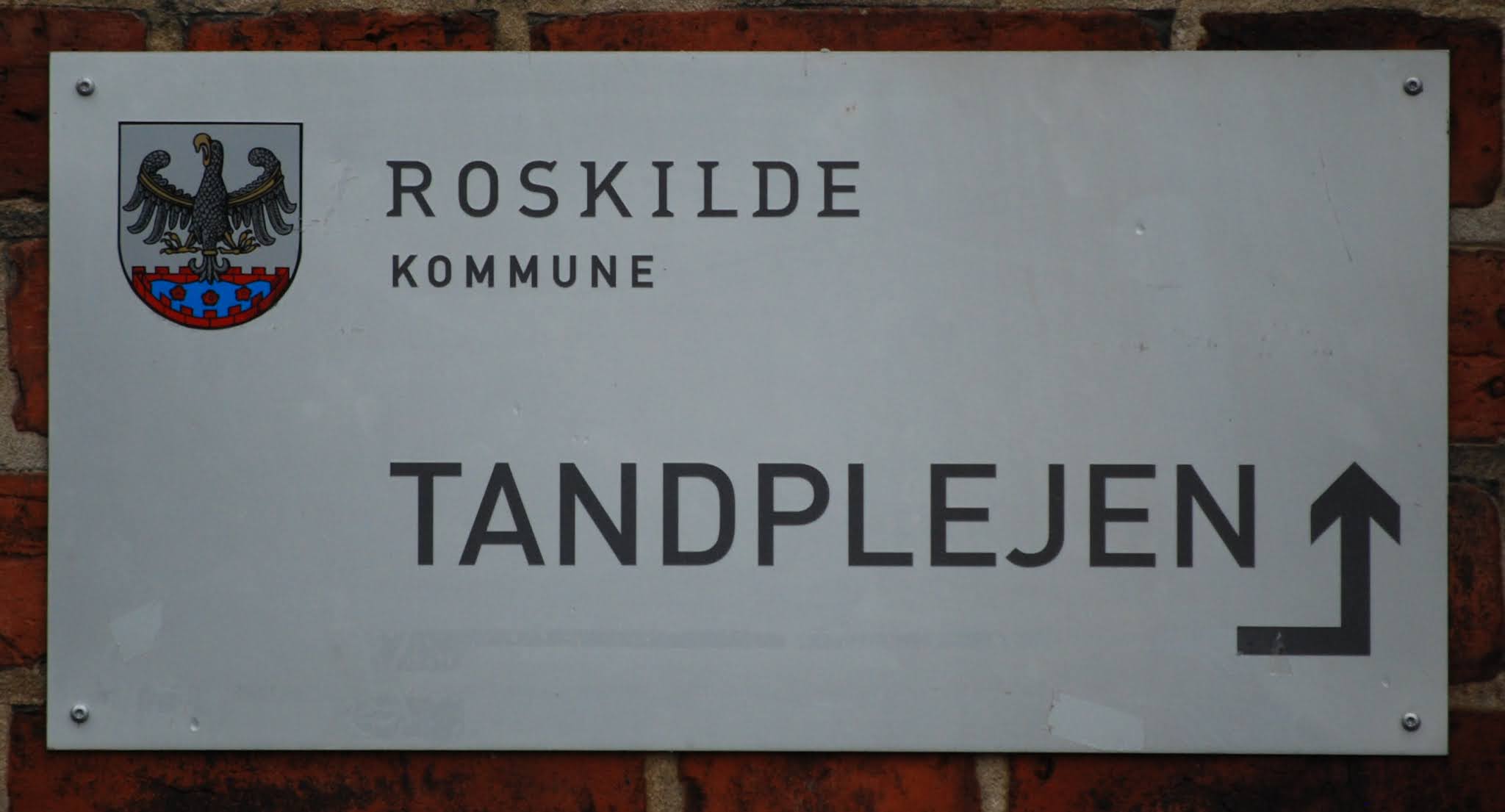
Roskilde's arms, a white shield with a black eagle with yellow kleestengeln (stylized wing bones ending in a trefoil shape) and on a base of  blue water surrounded by a red wall, three red roses. The arms are based on the oldest seal of the city, which is known from 1286. The seal shows a bird over a stream or water, surrounded by a wall. The stream is canting, kilde meaning well or spring. The roses first appear in 1384.

We found the arms of Roskilde on the façade of the large municipal building:


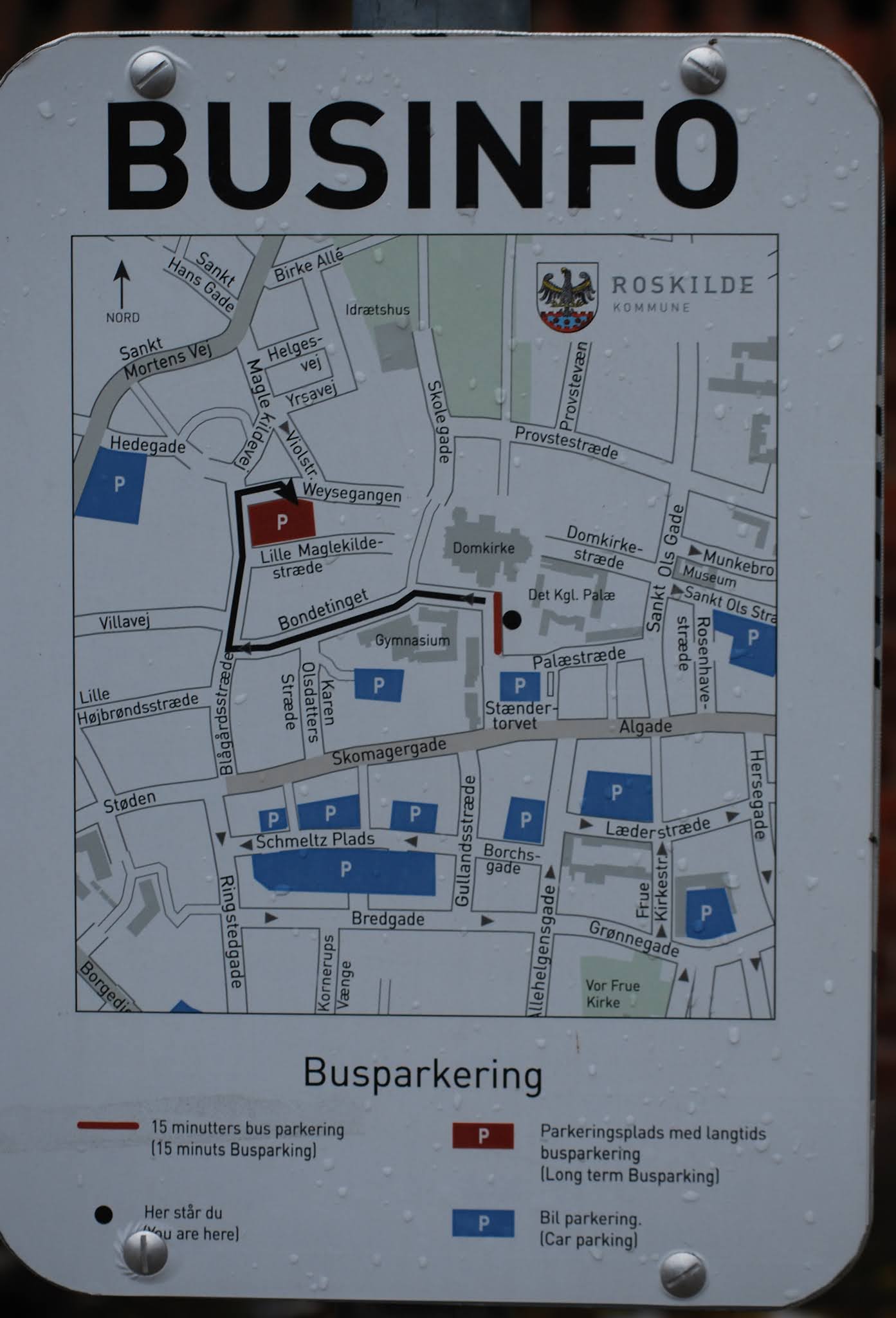
On directional and informational signs:


And even on a compressor dispensing air for car tires:


I have to admit, I really love it when a city uses its coat of arms, even on such everyday items as manhole covers, waste bins, or even air compressors.

Monday, November 8, 2021

Updates!


In addition to these regular (and sometimes irregular) posts, I will periodically find something or add to something I've created, and will add it to one or another of the sections in the left-hand column of this blog.

And sometimes after I've done that, I'll try to remember to tell you about it, so you can go look and see for yourself.

So, what's been added recently?

Links to several videos related to heraldry, most especially, links to a couple of recent lectures sponsored by The American Heraldry Society and uploaded to YouTube. (In the interest of full disclosure, I am a member of The American Heraldry Society, though I have no connection to the videos posted by it.)

Another blog I recently came across containing posts of heraldic interest, written by Robin Stanley Taylor. (To see it, you may need to click on the "Show All" link there; my host, Blogger, has apparently changed how many items the list will show by default, leaving me the options of displaying "5" or "10" links only.)

A recently-updated version of my American Heraldry Collection, notably including a couple of recent honorary grants of arms by the College of Arms in London to Americans, as reported in their quarterly Newsletter.

 I think that's all the recent updates to the blog. (Hey, I'm gettin' old, and don't always remember stuff like I used to.) But, of course, you don't have to wait for me to tell you about them; you can look for yourself at any time you like.

Enjoy!

Thursday, November 4, 2021

It's Good to Be ... a Rosenkrantz


Well, admittedly, it may not be so good to be a Rosencrantz in a Shakespeare play, since not only do you die in the end, you don't even get to die on-stage. Someone walks onto the stage and announces your (and your pal Guildenstern's) deaths.

Still, though, in other instances it can be fine to be a Rosenkrantz. In this specific instance, on display in Frederiksborg Castle in Denmark are four large round carved and painted wooden plaques, all dated to 1535, displaying several Biblical scenes.

But, of course, they also display heraldry! Notably, the arms of the Rosenkrantz family (which we have seen a number of times before in the castle) as well as the arms of several families who married into the Rosenkrantzes.

Here are the four roundels, going from left to right and top to bottom. (They are clearly not in the same order as the Bible scenes they represent, as number 1 has the resurrection of Christ, while number 4 has His crucifixion.)


And now let's look at the heraldry displayed on them.

First is the arms of Rosenkrantz with the arms, I believe, of Tot or Thott/vonThott, generally given as Quarterly gules and or (or sometimes, Quarterly or and gules).


Next, we have the arms of Rosenkrantz and another shield which I have been unable to identify. It's an unusual coat of arms, appearing to be Or a headless legless eagle displayed bendwise sinister sable.


The next roundel has the arms of Rosenkrantz alone.


And finally, in the fourth roundel, we find the arms of both Rosenkrantz and Gyldenstjerne! (Or as Shakespeare would spell the names, Rosencrantz and Guildenstern.)


Gosh, all of these Hamlet references make me want to go off somewhere else in Denmark. What do you think? Should we take a look at Kronborg Castle in Helsingør (Shakespeare's "Elsinore", where The Tragedy of Hamlet, Prince of Denmark is set? Come back next time to see if I fall for that especial temptation!

Monday, November 1, 2021

A Final Two Armorial Chests


Just in case you didn't feel inspired to combine your love of heraldry with a practical way of storing some of you seasonal belongings, here's two more armorial chests from Frederiksborg Castle in Denmark.


This intricately carved armorial chest has the date 1605 on its face, and in addition to all of the human figures and demi-figures (not to mention the cherub's heads), displays two pairs of shields and crests on its face.


In the left-hand panel we have the arms of what may be Tinhuus (though the Tinhuus arms are generally blazoned as Gules a stag erect (sometimes crowned) argent, which coloring does not match the arms as painted on the chest. I have not (yet) been able to identify the second coat of arms in this panel.


In the right-hand panel we have the (what should by now be familiar to you) arms of Rosenkrantz on the left, and on the right, the arms of Gøye (the Order book for Göe blazons these arms as Azure in bend sinister three escallops argent, while the depiction on the chest shows Azure in bend three escallops or).

And for our final armorial chest, we have this one, dated 1653 on its face:


In many ways, this is the least ornate of the armorial chests to be seen in the castle.

Here we have, on the left, the arms of Krabbe, Gules a fess argent, and on the right, the canting arms of Marsvin, Gules on a bend argent a porpoise [marsvin] embowed proper). I will admit to having been thrown off track a little in translating the blazon; the most common modern translation of marsvin from Danish into English is “guinea pig”, but what's painted on the arms is pretty clearly a dolphin. After some more hunting about, I found "porpoise" as a less common translation of the word into English.

And there you have it! Five armorial chests, ranging from the fairly simple to the very ornate, all great ways to combine a love of heraldry with a practical need of places to store things.

Thursday, October 28, 2021

A Couple More Armorial Chests


This next armorial chest is (or at least its armorial panels are) dated 1618 and, frankly, has a lot more inlay work on it than I would be willing to try myself. (And I'm pretty sure it would be expensive to pay someone else to do!)

It is, though, a beautiful piece of the furnituremaker's art:


The painted panels on the face of the chest are of two different coats of arms:


First is the arms of Brocker, Argent a pile reversed [or, inverted, or issuant from base) azure (yes, the white seems to have turned to black here). We have seen these arms before on one of the tablecloths posted about recently;


and then we have the arms of Scheel, Per fess: Per pale argent and gules; and azure. (Again, the white has gone to black here.) These arms are shown with same crest in the Order Books of the Order of the Dannebrog. At least four members of this family were members of the Order in the 17th and early 18th centuries.

The second armorial chest we're going to see today is this pretty massive-feeling one:


Unlike the previous two chests we have looked at, this one has no date(s) painted on its face.

It does, however, have four quartered coats of arms.


The shield on the left has Rosenkrantz in the first quarter; the second one has Ruder in the first quarter. We have seen both Rosenkrantz and Ruder before on one of the tablecloths on display in the castle.


The third coat of arms has Gyldenstern in the second quarter and Rosenkrantz in the third quarter (both of which we have seen before on one of the tablecloths); and the fourth coat has Biller (or Bille, as it is spelled in the Order Books) in the first and fourth quarters: Per pale gules and argent barry of four counterchanged (or, Barry of four argent and gules per pale counterchanged, it could reasonably be blazoned either way), which we have seen before on the tablecloth.

Again, if you are looking for some way to use your coat of arms as well as to store some of your stuff, you mind find some inspiration in these armorial chests here.

Monday, October 25, 2021

An Old Armorial Chest


We've all got stuff, right? And we all need places in which to store our stuff, correct? Well, what could be better for storing your stuff than an old carved wooden chest with some of the family's coats of arms painted on its face?

Well, I ran across several such armorial chests dated to the 17th Century in our tour of Frederiksborg Castle in Denmark, and thought I would share them with you here.

You may recognize some of the heraldry from one of the tablecloths in the castle that we have recently shared!


The first armorial chest is this gem, which confusingly has two different dates on it. At the tops of the pillars supporting the arches which frame the four coats of arms is the date "1672", while on the left and right armorial panels is the date "1617". While I can make at least a couple of guesses as to why there are two different dates some 55 years apart, they are only guesses and completely unsupported by facts, so I am going to keep them to myself.

If you are interested, please click the image above to see a larger, more detailed picture which better shows the carved and inlay items on this chest.

But, of course, this blog is all about the heraldry. The four coats of arms and crests on the face of the chest are, from left to right:


Rosenkrantz (which we have seen before, labeled "Rosenkrans").


I have not been able to make a definite identification of whose arms these are; there are several possibilities, but not (as yet) a perfect match.


The canting (punning) arms of Trolle, along with with their troll's head crest. (If you're going to use a cant in your arms, you might as well go all the way. As the old saying is: "Go big or go home.")


and finally, the arms of Ruder, another family whose arms we have seen on the tablecloth in the post before last.

I don't know about you, but I'm trying to think if I have enough wood in my workshop to make a similar chest. It could be an interesting project, don't you think?